
Why Contour Drawing Matters
From Andy Evansen
Contour drawing is something Andy Evansen talks about often—in demonstrations, critiques, and conversations with students. It’s not a trendy exercise or a novelty technique. For Andy, contour drawing is a foundational skill that directly affects how well a painting comes together later on.
At its core, contour drawing trains us to stop obsessing over small details and isolated shapes and instead focus on connections, relationships, and flow—right from the very first pencil marks.
Keeping the Pencil on the Paper
One of the most important aspects of contour drawing, as Andy teaches it, is keeping the pencil on the paper as much as possible. This simple discipline changes how the brain works.
When the pencil stays down, you can’t jump around the page chasing details. Instead, the eye is forced to follow how one shape connects to the next—how a form flows into another form. That mindset carries directly into painting.
Rather than seeing separations, you can start to see connections. And that shift alone can dramatically improve proportions, alignment, and overall design.
Beyond Blind Contour Drawing
Many artists associate contour drawing only with blind contour exercises—where the artist draws without looking at the paper. While Andy enjoys blind contour drawing and finds it incredibly useful, contour drawing is broader than that.
Blind contour drawing is valuable because it strips away preconceived ideas of what things should look like. The results are often comical, sometimes surprisingly beautiful, and frequently very expressive—almost Picasso-like. More importantly, they force us to truly observe rather than rely on memory or symbols.
Andy encourages students to practice blind contour drawing casually—at home, with simple objects, a pen, and a small sketchbook. It doesn’t have to be people. The goal is eye–hand coordination and honest observation.
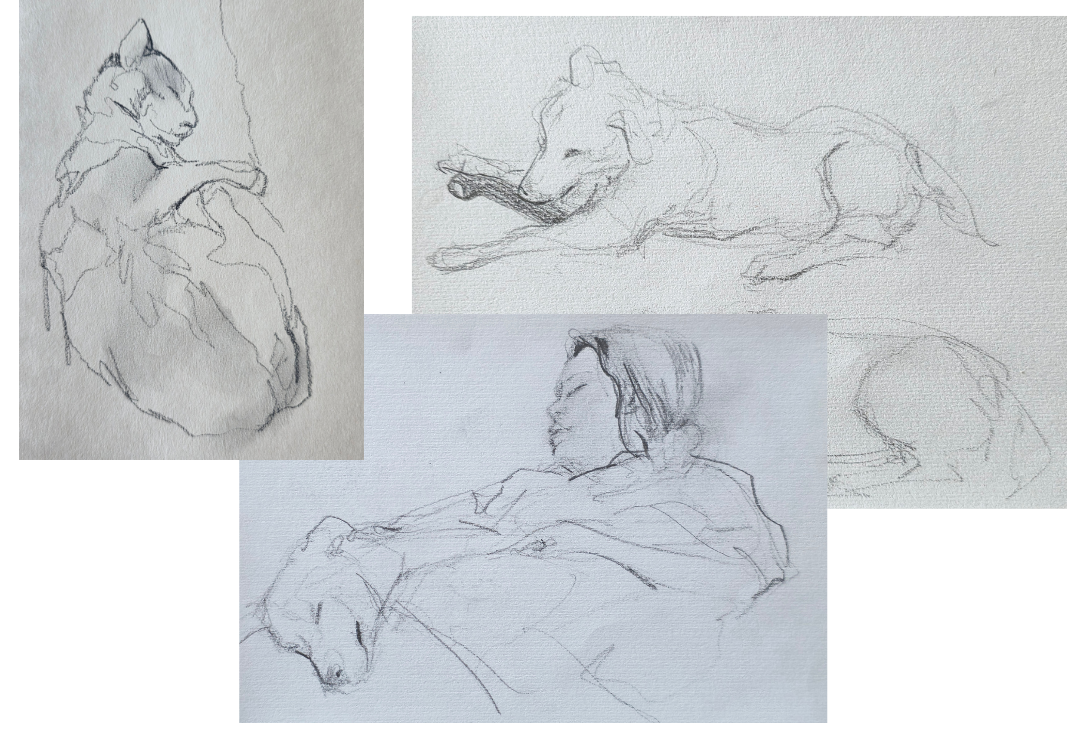
"Contour drawing is very effective when trying to capture those brief moments when you're unsure how long your subject will remain" - Andy Evansen
Many drawing problems Andy sees in student work—cars that don’t resemble the reference, figures that feel off—come from drawing mental shortcuts instead of actual relationships. Contour drawing breaks that habit.
Contour Drawing Is Not Just an Outline
There’s a common misconception that contour drawing is only about silhouettes. Andy is quick to correct that. While contour drawing emphasizes outer edges, the pencil can—and should—move through forms when needed.
Studying Charles Reid’s drawings makes this clear. Reid often keeps his pencil moving through intersections, stopping briefly at changes in direction, studying the form, then making confident, fluid marks. The lines aren’t hesitant or scratchy. They flow because more time is spent looking than drawing.
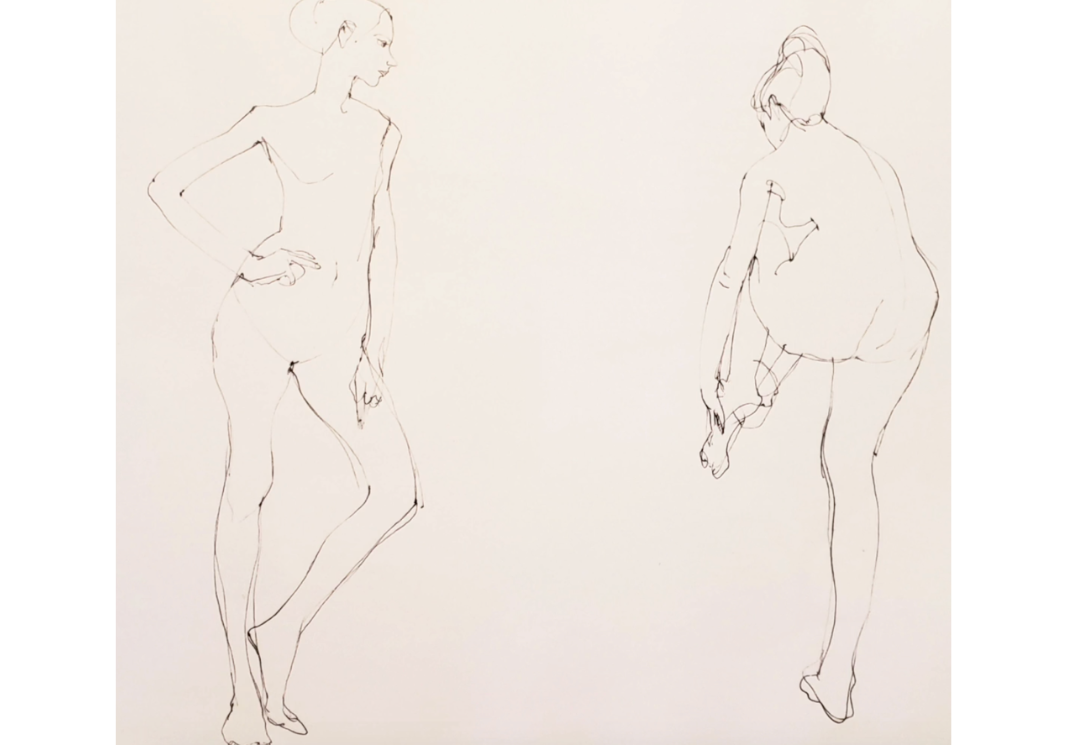
These drawings aren’t perfectly proportional—but they’re accurate enough. And they have far more life and character than overly tight, overworked sketches.
Drawing Through Forms Creates Better Alignment
One of the great advantages of contour drawing is how it solves alignment problems naturally.
Instead of drawing one isolated shape at a time, the pencil flows through forms. A line might pass through an arm, cross a knee, or continue into a foot. These guide lines may later be erased or painted over, but they help ensure that everything lines up correctly.
Andy often points out how this applies beyond figure drawing. In landscapes, for example, instead of lifting the pencil and jumping from one side of a street to the other, drawing straight through helps cars, buildings, and streets stay proportionally aligned.
This habit alone prevents many of the proportional issues students struggle with.
Drawing Less So You Can Paint More
Contour drawing also sets the stage for better painting—especially in watercolor.
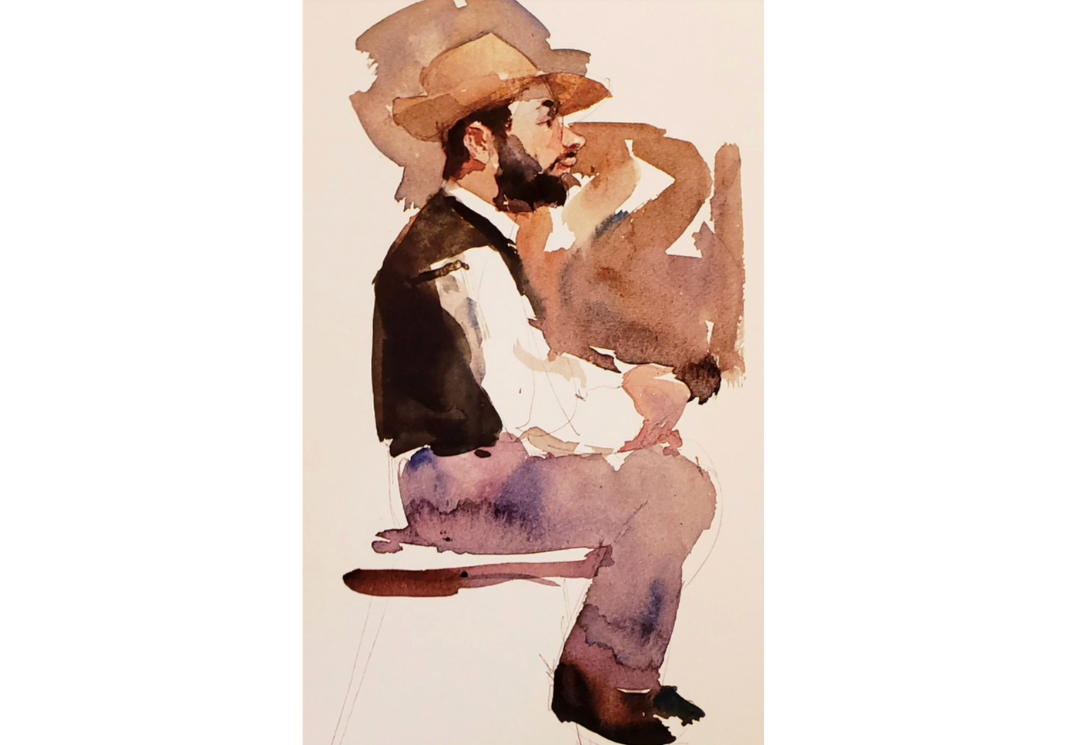
When the drawing is simple and connected, we are free to paint big shapes confidently. There aren’t dozens of small pencil marks acting as mental roadblocks. The brush can move freely.
Andy emphasizes that shadow shapes don’t need to be drawn in advance. Those belong to the brush, not the pencil. Overdrawing leads to timid painting, small brushes, and unnecessary detail.
Many of Charles Reid’s paintings reveal the contour drawing beneath the paint—evidence of a confident, simplified approach. Big shapes, minimal detail, and elegant negative space define the forms. A background shape might exist only to define the light edge of an arm. It doesn’t matter what the shape “is.” It only matters what it does.
Let Watercolor Be Watercolor
Andy also addresses something many students worry about: blooms and unexpected watercolor effects.
Blooms don’t bother him. In fact, he often loves them. They add character and remind the viewer that the painting is watercolor. Trying to fix every bloom usually does more harm than good.
This freedom comes from confidence—confidence that starts with a strong, simple drawing.
Contour Drawing in Still Life and Everyday Practice
Contour drawing isn’t limited to figures or landscapes. Andy shows how it works beautifully in still life as well. Objects overlap, connect, and relate to one another. Nothing floats alone on the page.
This approach makes it easier to lose edges, connect washes, and allow color to move naturally across the paper.
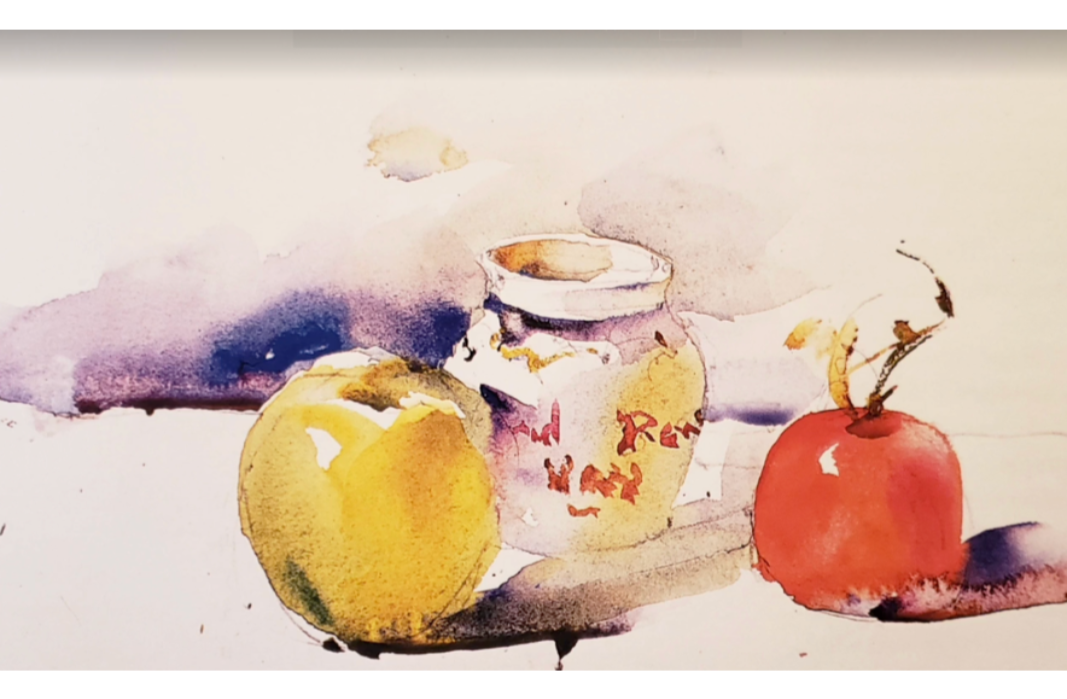
Andy also encourages contour drawing as a practical daily exercise—especially when time is limited. A sketchbook and pen in the evening can do more for long-term growth than doing nothing at all. The skills transfer directly into painting.
Applying Contour Drawing to Complex Scenes
When faced with complicated reference photos—figures, horses, boats, streets—contour drawing becomes a problem-solving tool.
By keeping the pencil on the paper, relationships reveal themselves. Where does one figure line up with another? Where does a horse’s head align with nearby shapes? Where does an axle connect two wheels?
Contour drawing removes guesswork. Proportions improve because we can’t avoid seeing how things actually line up.
Confidence Before the Brush Touches the Paper
Watercolor is unforgiving. There’s limited opportunity to fix mistakes after the fact. That’s why Andy stresses the importance of being comfortable with the drawing before painting begins.
A confident drawing leads to confident painting. A hesitant drawing leads to hesitation everywhere else.
Contour drawing isn’t about perfection. It’s about awareness, connection, and simplicity.
And like any skill, it gets better with practice.
If we as artists are willing to stay patient, push through discomfort, and trust the process, contour drawing becomes one of the most powerful tools we can bring into our watercolor work.
Learn more from Andy through his mentorship or video series: