
Why Value Matters More Than Color
(And How Skip Builds Strong Paintings from the Ground Up)
In the world of painting, color often steals the spotlight. But Skip reminds artists of a foundational truth:
Values do all the work. Color gets the credit.
Color creates emotion and beauty. But value — the relationship between light and dark — creates structure.
When a painting feels off, the issue is rarely the color. It’s usually weak value patterns, poor shape placement, or lack of planning. That’s why Skip consistently returns to one of the most powerful compositional tools available: the notan.
What Is a Notan in Painting?
A notan is a simplified value study, usually reduced to black, white, and sometimes a middle gray. The concept was popularized by Arthur Wesley Dow in the early 1900s. It allows artists to map major light and dark shapes before committing to a finished painting.
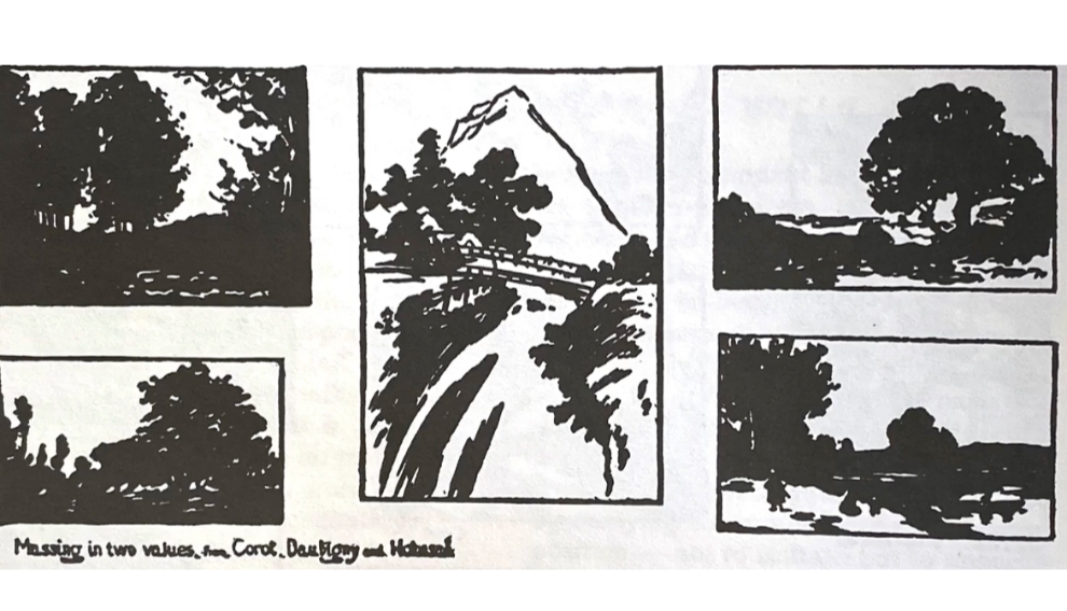
Skip treats notans as planning tools — not optional exercises. By reducing a scene to simple value relationships, artists can immediately see whether a composition will succeed.
Notans help artists identify dominant shapes, clarify visual hierarchy, strengthen composition, and train the eye to recognize balance and contrast.
Skip often encourages artists to study master paintings and reduce them into two- or three-value patterns. This reveals intentional design decisions that are rarely accidental in strong work.
Why Do the Edges of the Canvas Matter So Much?
Skip teaches that the four edges of the frame are among the most important compositional elements in a painting. Every shape and value inside the work must relate to those boundaries.
One concept he stresses is allowing shapes to “bleed” off the edge — meaning major value masses extend beyond one or more sides of the composition. Artists often describe this as a one-edge bleed, two-edge bleed, or three-edge bleed.
When shapes interact intentionally with the edges, compositions feel more natural and dynamic. When they do not, paintings often feel boxed in or static.
What Are Negative Shapes (And Why Should You Care)?
Most beginners focus only on positive shapes — trees, buildings, or figures. Skip trains artists to see the negative shapes as well: the sky between branches, the gaps between objects, and the spacing between elements.
Even spacing creates stiffness. Variety creates rhythm.
Carefully designed negative space is not background. It is structure.
Why Thumbnail Sketches Save Paintings
Before beginning a painting, Skip prefers quick thumbnail value studies.
His rule is simple:
If the composition works clearly in black and white, the painting will likely succeed.
If it feels uncertain in the thumbnail, the final painting often struggles.
These studies take only minutes, but they prevent hours of frustration. Time spent organizing values and shapes during planning is never wasted.
Are Centered Compositions Always Bad?
Many artists avoid placing focal elements in the center. Skip points out that master painters sometimes center subjects intentionally — but they disguise symmetry through secondary focal points, directional lines, texture contrast, and varied value structure.
Centered compositions can work. They simply require balance and thoughtful design to keep the eye moving.
Why Edge Variety Creates Depth and Realism
Even with strong color and values, paintings can fail when edges are uniform.
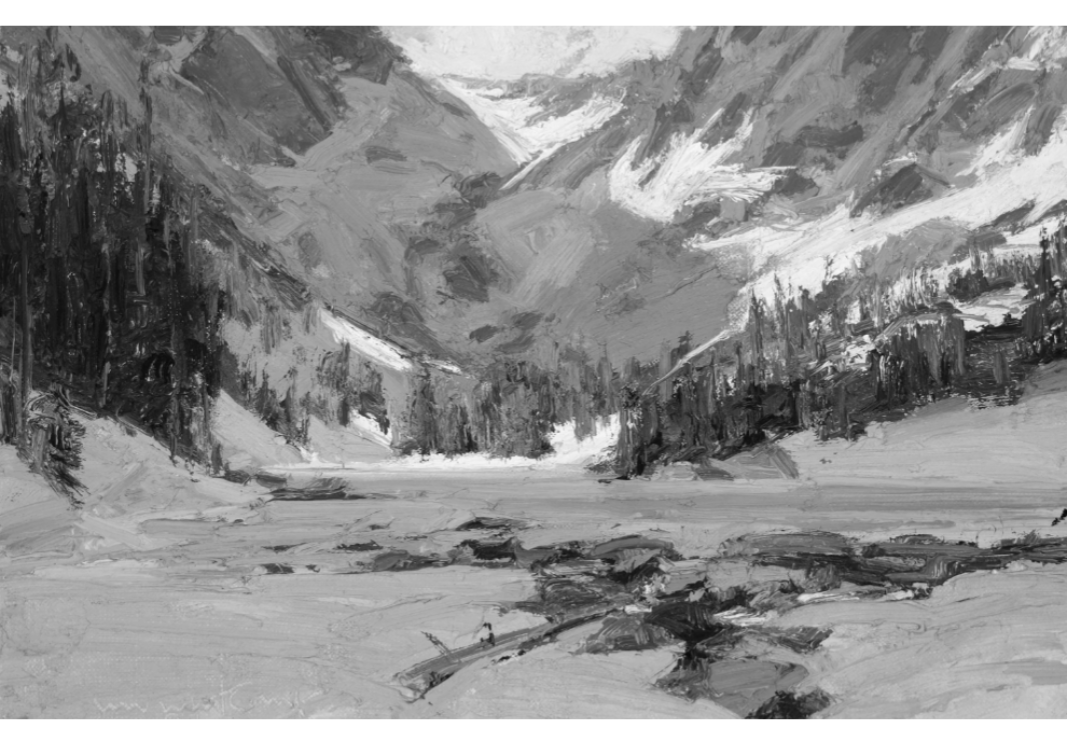
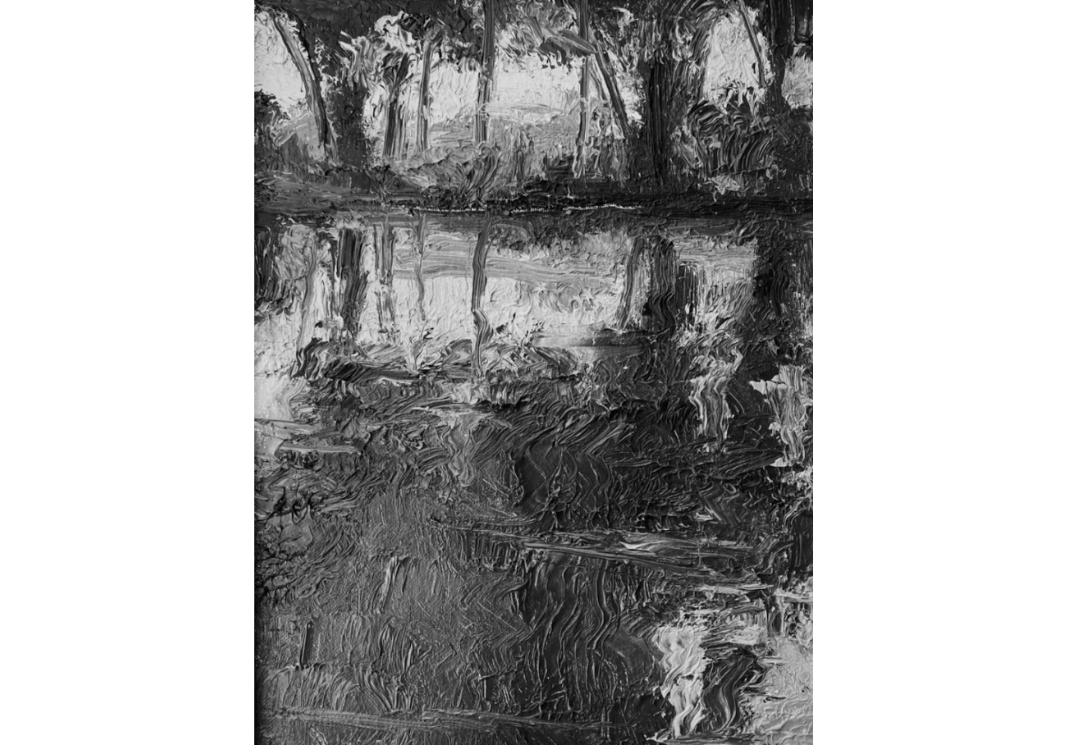
Skip studies edges through small monochromatic oil sketches to plan lost edges (soft transitions), found edges (sharp boundaries), brush direction, and paint thickness.
Edges control realism, mood, and depth. Uniform edges flatten a painting. Varied edges bring it to life.
How Brush Direction Affects Believability
Skip approaches brushwork by studying how natural elements behave. For example, water flows horizontally across a scene, while reflections visually pull downward toward the viewer.
He mirrors this behavior through brush direction to create believable movement.
He also emphasizes using enough paint. Thin or dry paint restricts expressive brushwork and limits control.
Why Study Master Painters?
Skip believes nothing in a great painting happens by accident.
Studying master painters reveals intentional value design, deliberate shape placement, edge control, and compositional balance.
Reverse-engineering strong paintings builds artistic instinct faster than guessing.
How to Check Your Values Using Photography
When working, Skip often photographs his painting and converts it to black and white.
Removing color reveals excessive contrast, insufficient value separation, loss of atmospheric depth, and compositional confusion.
Even small adjustments discovered through black-and-white evaluation can dramatically improve a finished piece.
Why Variety Creates Visual Harmony
Skip often shares a guiding principle inspired by Frederick J. Waugh:
With few exceptions, no two spaces in a painting should be the same size or shape.
Visual variety in spacing, value, shape, and edge quality creates movement and engagement. Sameness creates boredom.
Final Thoughts: Build Structure First
Skip’s approach to painting is rooted in thoughtful preparation and strong foundational design.
He prioritizes value clarity, shape relationships, edge control, and deliberate planning.
Color may attract attention. But structure — value and composition — determines whether a painting truly holds together.
Through notans, thumbnails, edge studies, and disciplined observation, Skip demonstrates something important: master the basics first, and artistic freedom follows.
Join Skip’s mentoring membership and develop the structure, clarity, and design discipline that turn good paintings into confident, cohesive work