
How To Compose a Painting From an Overwhelming Landscape
from Mitch Baird
Artists and nature enthusiasts often find themselves mesmerized by the beauty of a vast landscape. Mitch Baird offers a perfect opportunity to explore the principles of composition and color in painting below.
Quick answer: When facing an expansive view, don't try to paint everything. Narrow your focus to one composition built around four things: contrast, value, atmospheric perspective, and story. Each is explained below.
Why Can't You Paint Everything You See?
A vast landscape offers endless possibilities, but not every element serves the story the artist wants to tell. Instead of capturing everything, the focus must be narrowed to a specific composition that highlights contrast, color, and depth.
What Is "Where's the Party?" in Painting?
Definition: "Where's the party?" is informal art-instruction shorthand for where is the strongest contrast in a scene — the area that naturally draws the viewer's eye first.
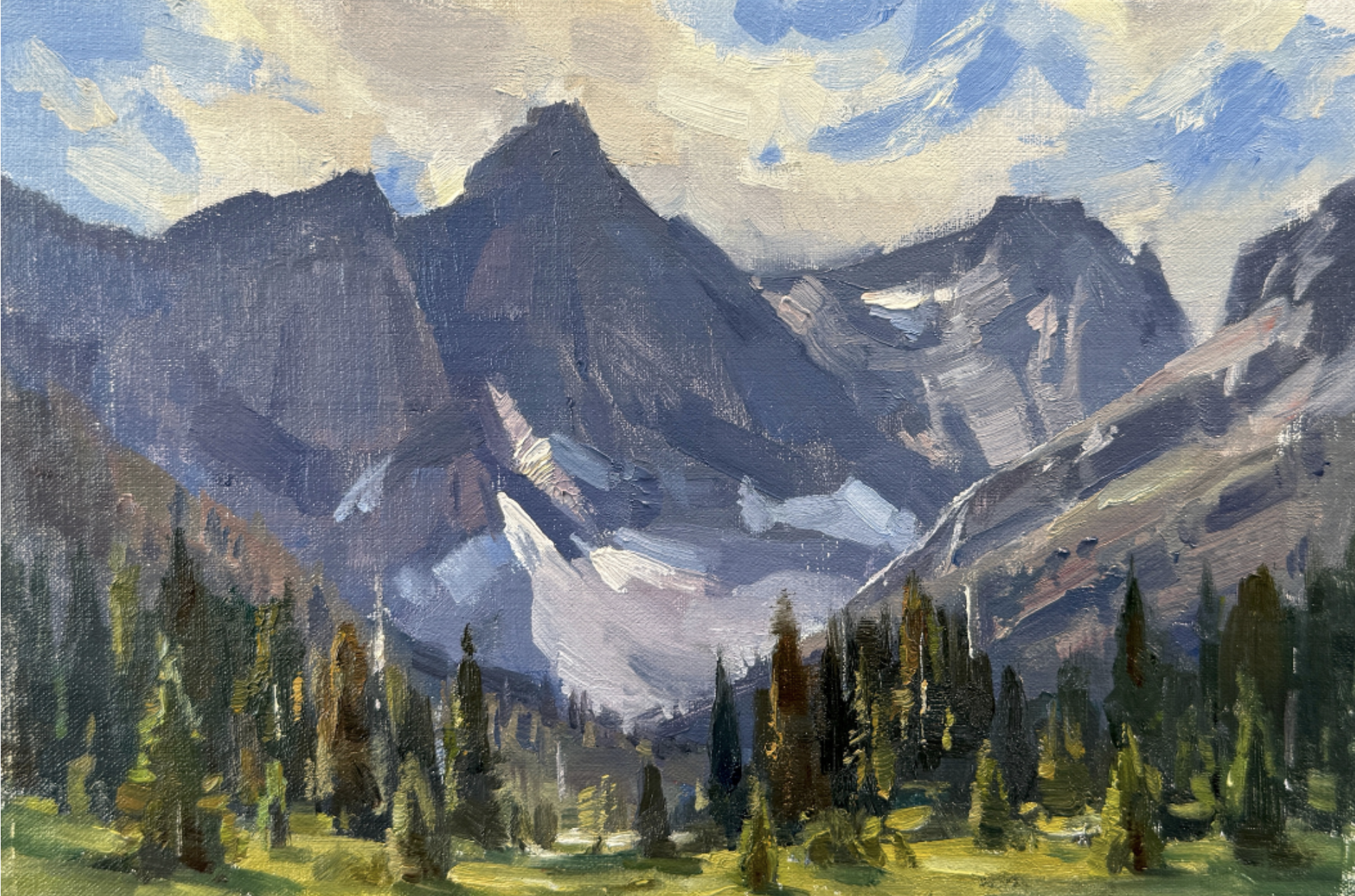
Understanding contrast is crucial to making a painting visually engaging. If the strongest contrast exists in one part of the scene, the composition should guide the viewer's eye there. That area is where the main focal point belongs — not necessarily the prettiest or most dramatic feature, but the one with the most contrast.
How Should You Handle Value in a Bright Landscape?
When dealing with value (brightness), artists must be careful not to let a vivid color overpower the composition.
Painting a bright or saturated area of a scene exactly as it appears risks overwhelming the composition and pulling attention away from the real focal point. The fix: slightly tone down the value so it supports the story rather than competing with it.
What Is Atmospheric Perspective in Landscape Painting?
Definition: Atmospheric perspective is the visual effect where objects appear cooler in color temperature and lower in saturation as they recede into the distance, caused by atmospheric haze.
Recognizing these temperature and value shifts — from warm and saturated up close to cool and muted in the distance — is key to creating a sense of realism and depth in a painting.
What's the Story? Why Painting Isn't About Replication
With a stunning scene, it's tempting to capture everything. But painting is not replication — it's storytelling. Artists must ask: "What is the story to be told?" Not every beautiful element contributes to that narrative.
A striking feature elsewhere in the scene might catch the eye, but if it isn't where the strongest contrast lies, it likely isn't the best focal point. The composition should shift toward wherever the visual interest naturally leads — creating one clear, intentional visual statement.
A 4-Step Checklist for Painting an Overwhelming Landscape
Next time you face a landscape that feels too big to paint, ask:
Where's the contrast? That's where the eye will go.
What values dominate the scene? Adjust brightness/darkness to maintain balance.
How does atmospheric perspective affect the colors? Use cooler, less saturated tones in the distance to create depth.
What's the story? Focus only on the elements that communicate it.
Key Takeaway
Even surrounded by immense natural beauty, an artist's job is to distill a scene into something visually powerful and cohesive — not to reproduce it. Focusing on contrast, value, and atmospheric perspective turns any breathtaking view into a successful, intentional painting.
Mitch Baird’s Painting with Perception mentorship helps artists simplify their approach, trust their instincts, and gain confidence in their work. Through expert guidance, you’ll refine essential skills like composition, color harmony, and value while receiving personalized feedback: