
Perspective: The Horizon Line and Why It Matters
from Mitch Baird
Perspective is one of the most important concepts in drawing and painting. It helps artists create the illusion of depth, distance, and realistic space on a flat surface.
At the heart of perspective is a simple but powerful idea: the horizon line.
What Is the Horizon Line?
The horizon line is always at your eye level. It represents where the earth and sky appear to meet from your viewpoint, even if you cannot physically see it.
Artists use the horizon line as the foundation for constructing perspective because it determines how objects appear in space relative to the viewer.
Think of the horizon line as the backbone of your drawing. Once you know where it is, the rest of the perspective system becomes much easier to understand.
Why Is the Horizon Line Important?
The position of the horizon line controls how viewers experience a scene.
A high horizon line makes viewers feel as though they are looking down on a subject.
A low horizon line makes viewers feel as though they are looking up at a subject.
A horizon line near the middle of the composition creates a more neutral viewing experience.
By adjusting the horizon line, artists can dramatically change the mood and visual impact of a painting.
Example: A House on a Hill
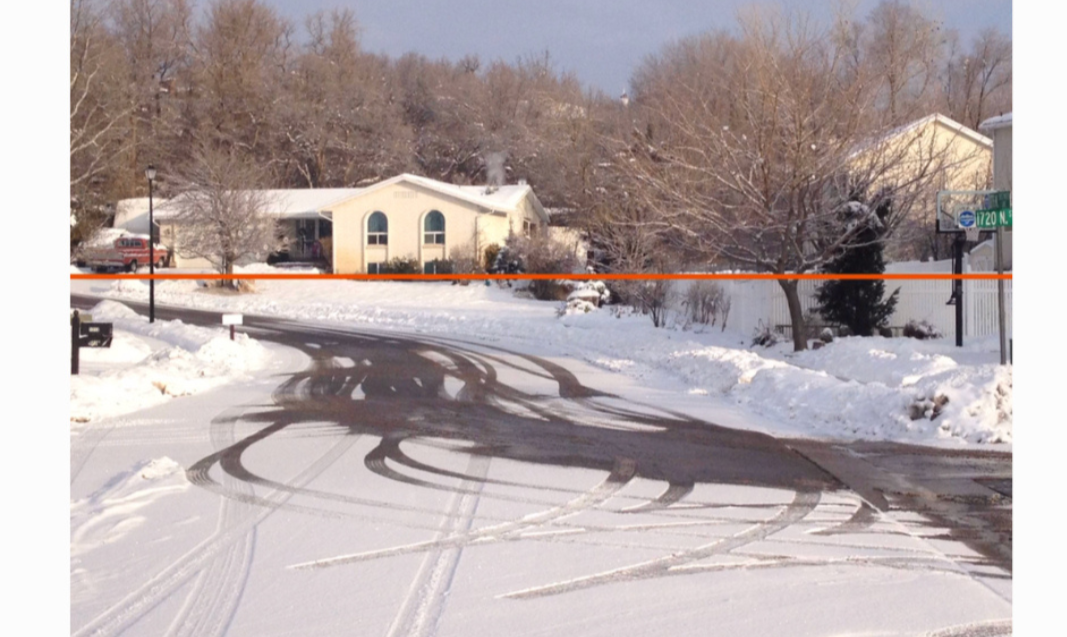
Imagine standing on a quiet road and looking toward a house sitting on a hill.
Before making your first mark, identify the horizon line. Because the horizon line is tied to your eye level, it remains constant regardless of how much sky or foreground you choose to include in the composition.
In this example, the house sits above the viewer. The bottom of the structure aligns closely with the horizon line, helping create the impression that you are looking upward toward the house.
This relationship between the viewer and the subject is one of the key ways perspective communicates depth and position.
How Sloping Ground Changes Perspective
Perspective becomes more interesting when the ground is not flat.
As a road climbs uphill, the directional lines within that road begin pointing toward a new perspective system. The tire tracks, edges of the road, and other parallel lines appear to converge toward a higher horizon line.
This happens because the surface itself is changing angle.
Whenever the ground plane changes direction, the perspective changes as well.
Understanding this principle helps artists accurately paint hills, mountain roads, pathways, and other uneven terrain.
How Perspective Works on Tilted Objects
A useful way to understand perspective is to imagine a simple box.
When the box sits flat on level ground, its edges recede toward vanishing points located on the horizon line.
If you tilt the box, the edges no longer point toward the same vanishing points because the object's orientation has changed.
The same principle applies to:
Hills
Roofs
Staircases
Ramps
Sloping roads
Architectural features
Any surface that changes angle creates its own perspective relationships.
What Are Vanishing Points?
Vanishing points are locations where parallel lines appear to meet in the distance.
Although the lines never actually touch in reality, our eyes perceive them as converging because of perspective.
Roads, fences, railroad tracks, buildings, and rows of trees all demonstrate this effect.
Vanishing points help artists create believable depth and structure within a composition.
How Artists Use Perspective to Control a Composition
Perspective is not simply a technical drawing tool. It is also a storytelling tool.
The placement of the horizon line influences what the viewer notices first and how they emotionally experience a scene.
Ask yourself:
Do you want to emphasize a dramatic sky?
Do you want viewers to focus on foreground details?
Should the subject appear powerful, distant, or approachable?
Your perspective choices help answer those questions.
Is Learning Perspective Still Important Today?
Yes.
Modern software and digital tools can assist with perspective construction, but understanding perspective remains an essential skill for artists.
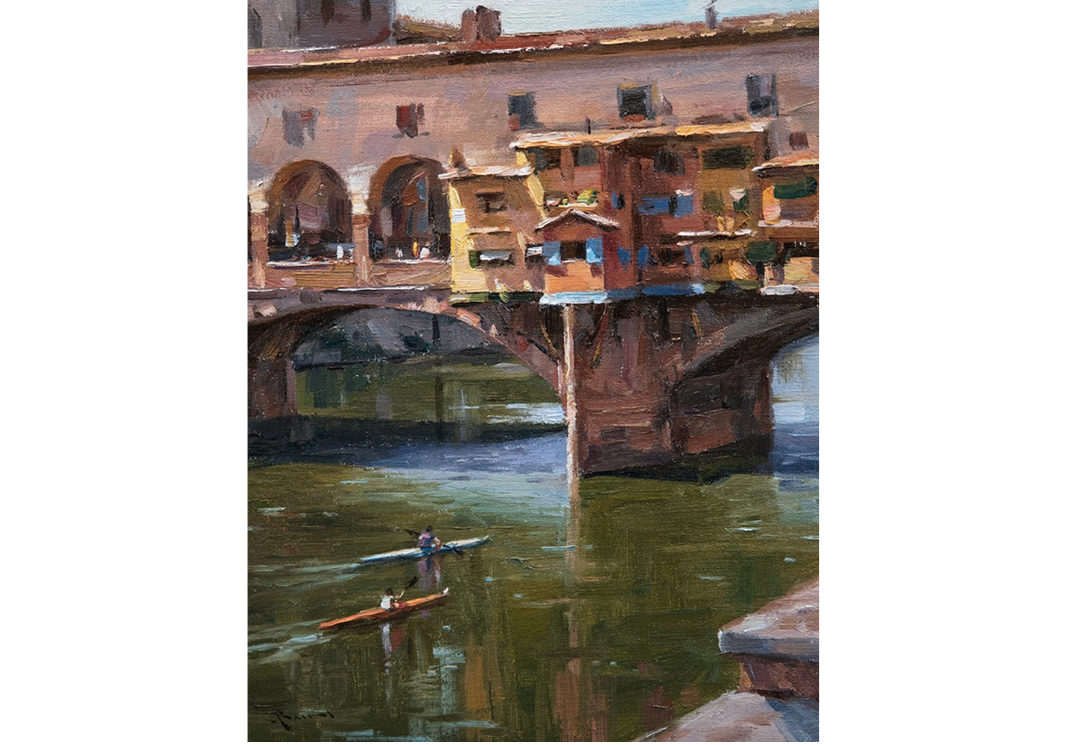
The great painters of the past mastered perspective because it gave their work structure, depth, and believability.
When you understand perspective yourself, you gain greater control over your compositions and can make stronger artistic decisions without relying entirely on technology.
Key Takeaway
The horizon line is the foundation of perspective drawing and painting.
Once you establish your eye level and identify the horizon line, you can accurately place vanishing points, construct objects in space, and create a convincing sense of depth.
Whether you're painting landscapes, architecture, or still life subjects, understanding the horizon line will help you create stronger, more realistic artwork.
The more you practice identifying horizon lines and perspective relationships, the more natural and intuitive they will become.