
Figures in Still Life
from Laura Robb
When composing still life, most artists think about everyday objects, fruit bowls, or carefully arranged vessels. But something transformative happens when you introduce figures into the composition. And here, “figures” doesn’t just mean people—it includes animals, dolls, toys, illustrations, or even anything that the viewer might anthropomorphize. Humans are biologically wired to search for faces and personalities in images. We look for eyes, silhouettes, gestures—sometimes even when those shapes don’t actually exist.
If people are finding animals in Cheetos (and yes, there really is a museum in New York dedicated to them), you can guarantee they’ll find figures in your paintings—whether you intended them or not. Understanding this instinct is a powerful tool for still life composition.
Harnessing the Viewer’s Bias Toward Figures
Because viewers instinctively look for faces and living forms first, the most effective way to incorporate a figure is to place it directly in the center of interest. Let the viewer go where they are already predisposed to go.
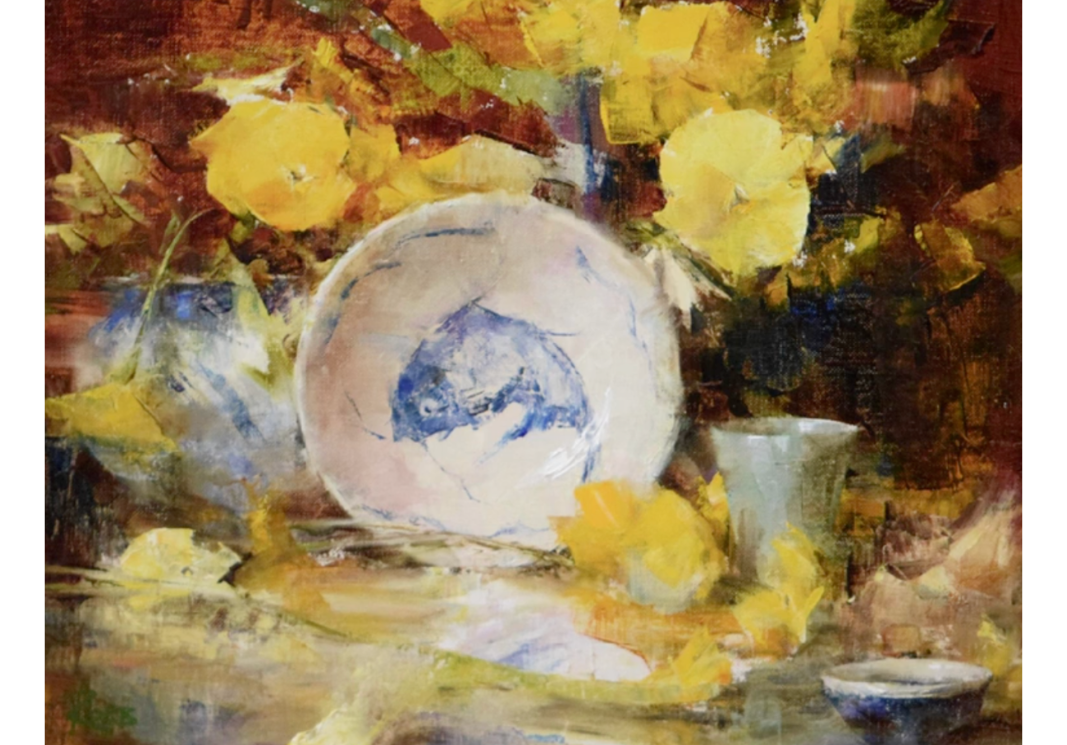
A fish placed in the focal area—reinforced by high chroma, strong value contrast, or a striking color combination like blue against yellow—becomes irresistible. It satisfies the viewer’s natural tendency to seek a subject with personality, while you remain in control of the composition:
When You Have Multiple Figures: Choose a Primary Destination
Multiple animals or people in a still life can create competition if you aren’t strategic. The eye needs a leader—a single visual destination.
This can be done by managing:
Scale – Larger elements feel more important.
Value – Lighter images pull attention.
Contrast – Dark/light edges around an object draw the eye first.
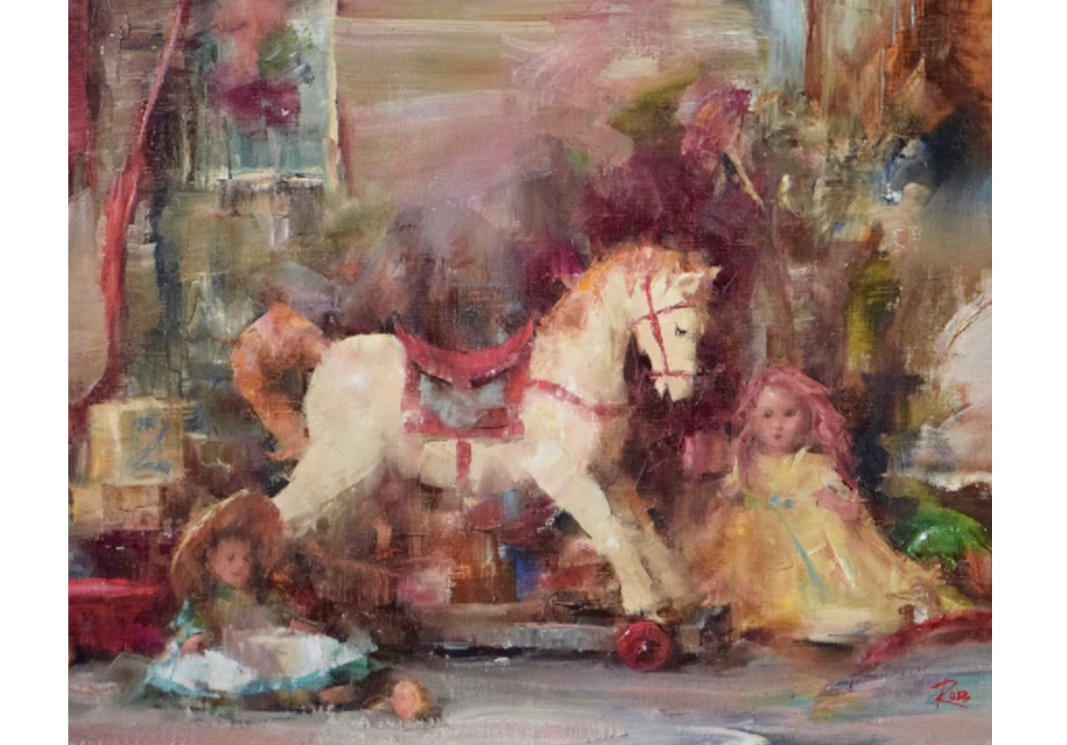
For example, when a horse is both larger and higher contrast than surrounding elements, the viewer naturally sees it first—even if other figures exist in the painting.
When the Figure Is NOT the Star
Sometimes the figure should simply exist as a supporting character. In those cases, the key is to build a separate, stronger center of interest somewhere else.
How to do that:
Use dark–dark + light–light pairings
Concentrate fine detail in one area
Introduce strong color
Then, paint the figure with restraint:
Closer values
Muted chroma
Lower contrast
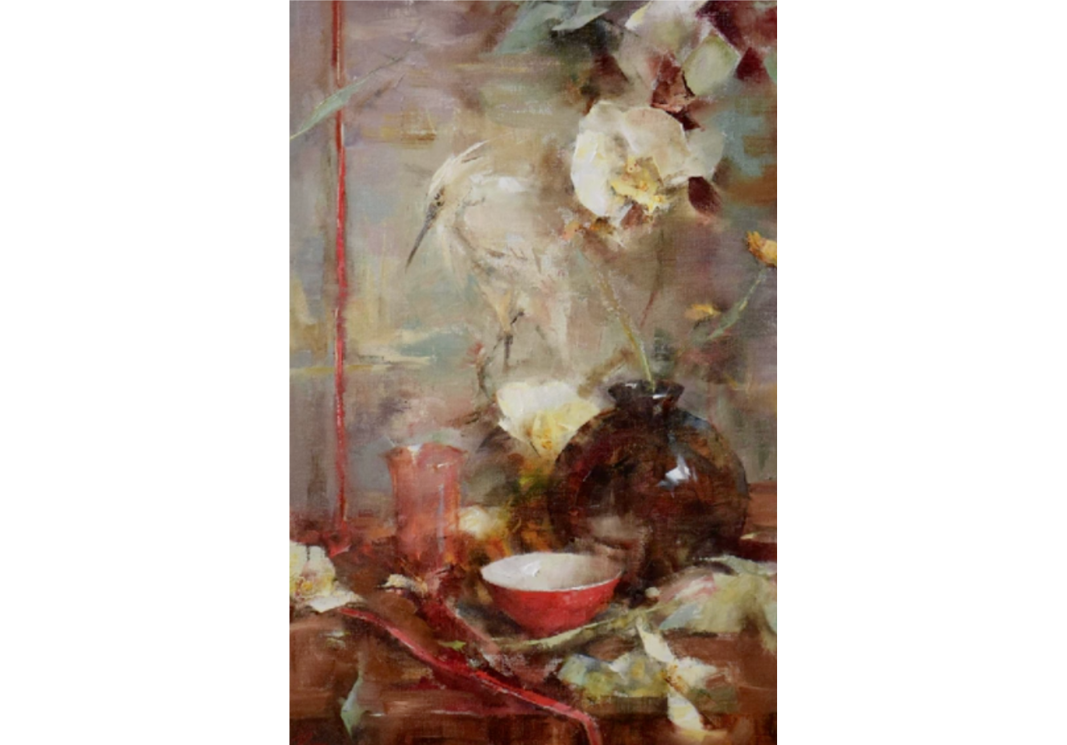
In the example below, there is a heron in the background with subdued tones. If the background were dark and the heron white, the entire painting would become about the bird. But if the background and figure share similar value ranges, the eye will travel to brighter or more contrasting areas instead.
Treating Figures Like Background Textures
Consider a still life where a small portrait or animal is printed on an object like a tray or ceramic surface. If the imagery on the object is stronger than the still life itself, the painting becomes about the illustration—not about your composition.
One solution is to treat the figure like a texture:
Lower the contrast in its features
Subdue directional light on the face or body
Pull the attention toward something else—like a bright teapot or a cup with crisp shadows
The result becomes an elegant abstraction: the viewer may not even notice the figure until you point it out.
The Masterclass of Hidden Figures: John Singer Sargent’s The Hermit
Even in outdoor scenes, these same lessons apply. John Singer Sargent’s The Hermit is a brilliant study in how we discover figures rather than stare at them immediately.
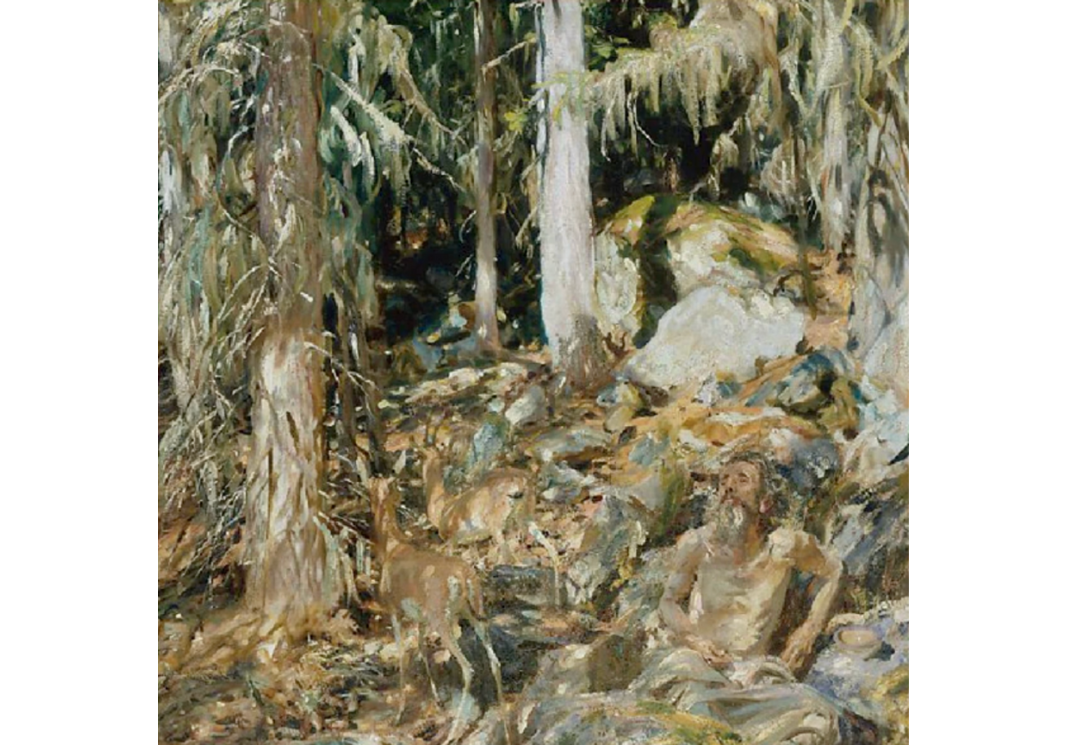
At first glance, the eye goes straight to the bold value contrasts:
Sunlit rock and tree trunk
Deep forest shadows behind
Only after the mind processes that powerful form does the viewer register:
The hermit, softly tucked into the corner
The deer, lingering quietly at the edge of the composition
The magic is in the restraint. The figures are rendered with neutral tones, limited contrast, and minimal emphasis. It mimics reality: when walking through a wood, a deer will notice you long before you notice it. Sargent paints the moment as nature reveals it—slowly, subtly, truthfully.
Why This Matters for Still Life Artists
Regardless of style, medium, or subject, figures in still life are teaching tools:
They show you where the viewer will look instinctively.
They test your ability to control attention.
They challenge your understanding of value, contrast, and hierarchy.
Figures are not merely decorative. They are powerful compositional levers. Once you master how to either spotlight or disguise them, your still life work gains complexity, story, and emotional pull.
If you are interested in honing your skills in still-life painting, Laura’s webinar and self-study course are excellent resources for anyone eager to learn and grow as an artist: