
Plein Air: Where It All Begins
from Kenn Backaus
There is something humbling about standing in front of nature with a brush in hand. The wind, the light, the shifting clouds—none of it waits for you. And that is precisely why plein air painting remains one of the most powerful teachers an artist can have.
Plein air is where you meet the real language of nature. It is unforgiving when you think you understand it—and generous when you approach it with humility. Every time the landscape “kicks your butt,” it forces you to learn more about light, values, rhythm, and movement than any studio lesson ever will.
Work From Life Whenever You Can
Working from life isn’t a prerequisite for every artist, but it is a catalyst. Outdoors, you discover how light behaves—not how it is *photographed*. The greens aren’t the same as the camera shows. The water is never the same color twice. Cloud shadows drift, wipe out your plan, and force you to adapt.
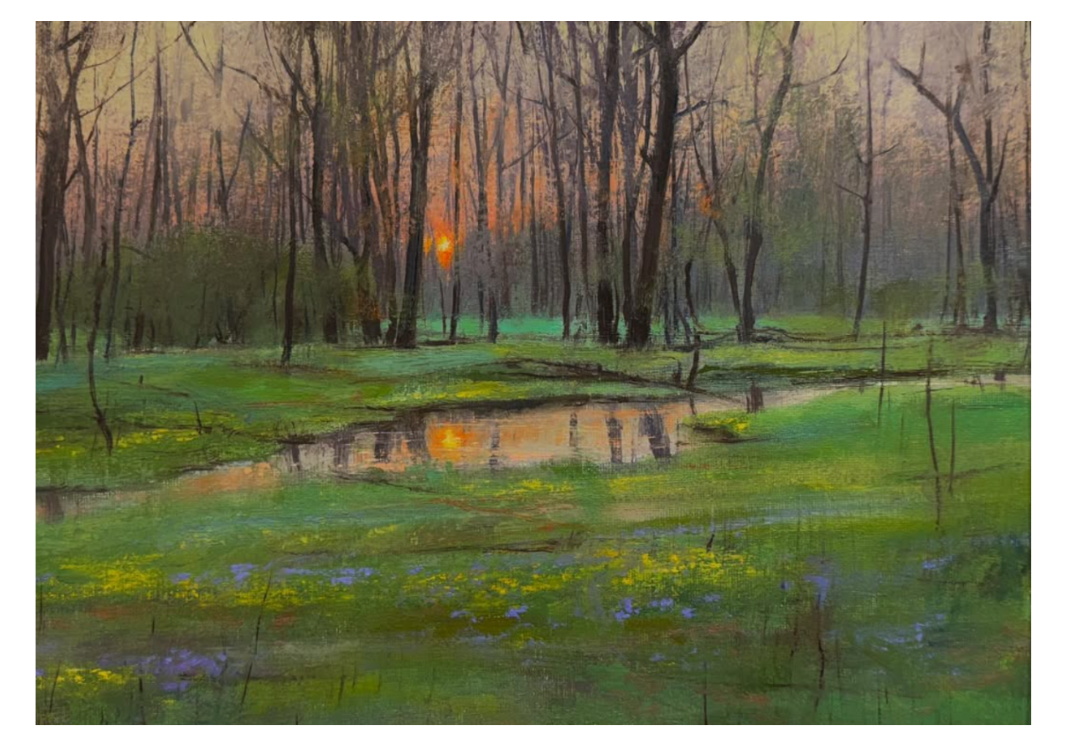
Nature has harmony built into every scene. Once you start searching for it and understanding it, your painting instincts sharpen. You begin noticing:
How values relate across the composition
Which shapes anchor the eye
Where color temperature shifts
Which edges need to be hard, and which need to disappear
How rhythm moves—through line, mass, or contrast
These are the pillars of good painting, and plein air conditions test each one.
One Scene—Many Decisions
Artists often assume a painting must come from a single vantage point. Most do. But occasionally a subject asks for something unusual.
Imagine hiking to the base of a waterfall—close enough to feel the spray, high enough in the Colorado alpine that snow still lingers in summer. From that vantage point, the water dominates the scene. Its edges are crisp, its mass powerful, its flow loud.
You begin at that intimate vantage point: blocking in watercolor-like washes, then slowly moving toward opaque paint. You work the edges, define the movement of the water. But then you step back—200 yards—and suddenly the entire mountain appears. Now the waterfall becomes a feature within a greater story.
Sometimes plein air requires two setups, two viewpoints, and one vision. The goal isn’t the literal document of a place—it’s the *experience* of it.
Edit With Intention
Editing begins on location, not back in the studio.
Perhaps the background mountain is too distant—move it.
Maybe a pine tree steals attention—remove it.
Maybe the composition lacks foreground presence—introduce a tree, a rock, or a shadow.
Composition isn’t a submissive act. You don’t copy nature; you guide the viewer’s eye through it.
Use organic shapes against geometric ones.
Contrast textured areas with soft masses.
Balance light and shadow deliberately.
Allow diagonals to lift the viewer upward, and vertical trees to anchor the scene.
These decisions aren’t accidental. They are planned and refined as you paint.
Squint—Always
The simplest tool you have outdoors is also the most powerful: **squinting**.
Artists write it on their easels for a reason.
Squint to see:
Major shapes, not details
True value relationships
Where the brightest light truly lives
Which darks hold the composition together
The world becomes abstract—just shapes and value masses—and suddenly your decisions become clearer.
Paint Thick Where the Light Is
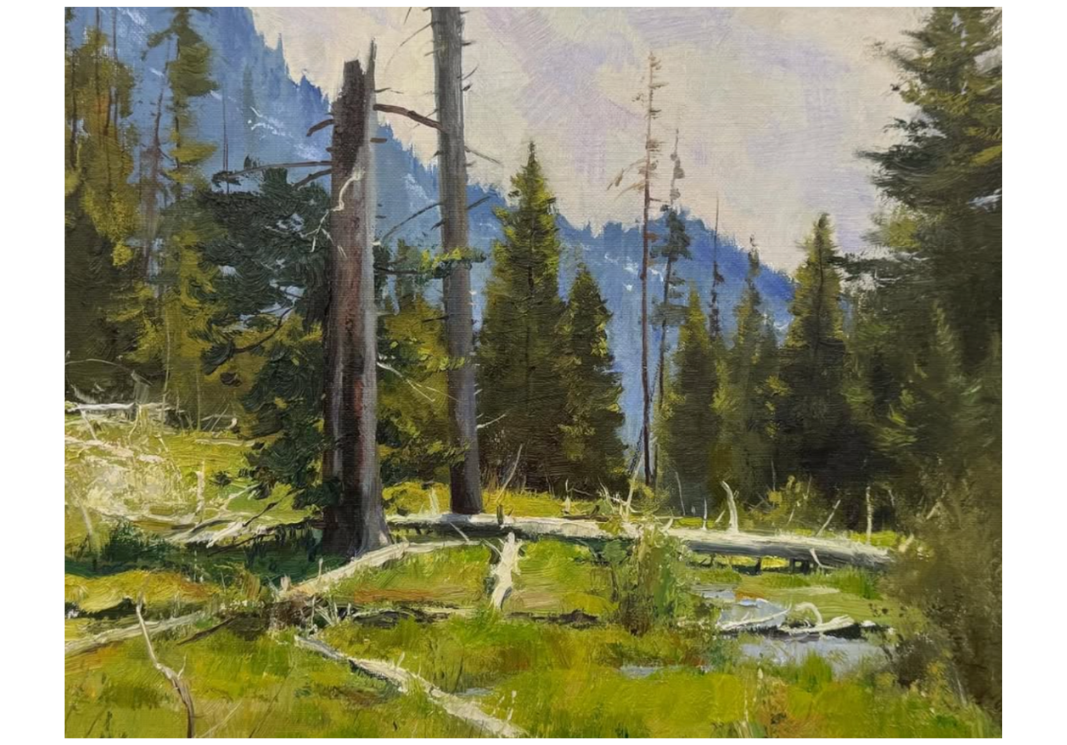
A defining principle: thinner paint in darks, thicker paint in lights.
Oceans flaring with sunlight, rocks struck by noon glare—lay paint boldly, almost sculpturally. The opacity honors the brightness. Meanwhile, shadows stay lean, transparent, allowing the canvas tooth to breathe.
Your paint quality becomes part of the narrative.
Respect the Vertical Truth
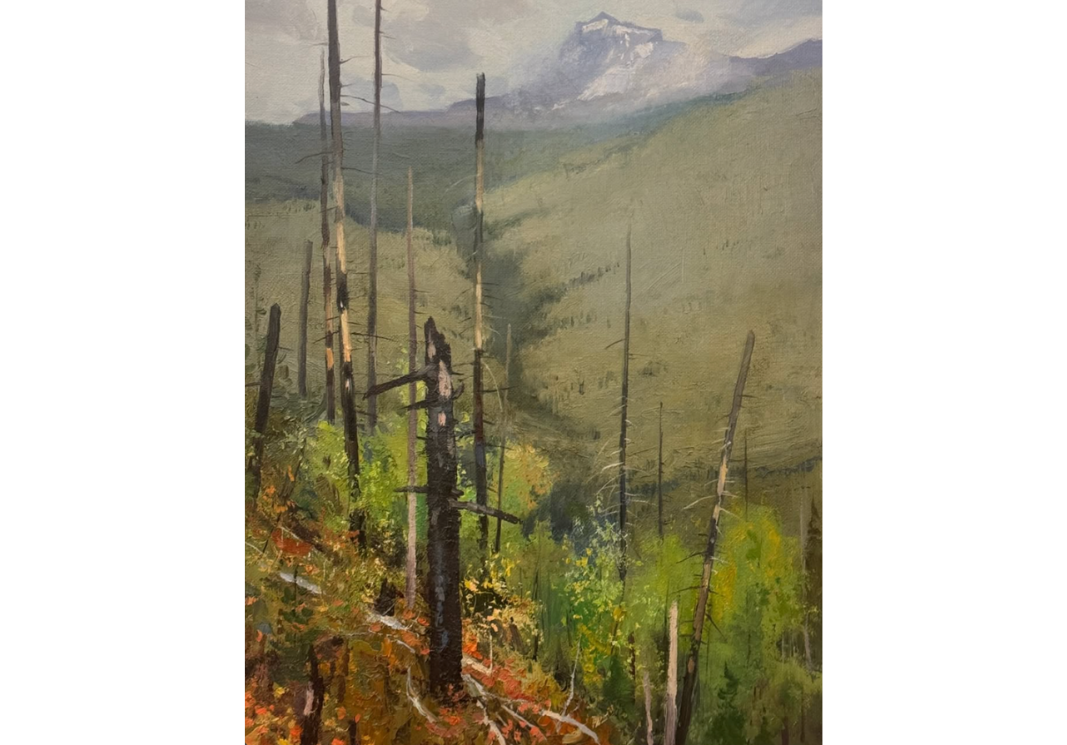
Mountains deceive the eye. Angles look impossible until you read them with the help of verticals. Trees grow straight—even on steep slopes. They anchor reality.
Use them to show:
Grade of cliffs
Drama of inclines
Direction of movement
The verticals are a compass for the viewer and a stabilizer for your composition
Your Studies Are Seeds
Some plein air works are complete in themselves.
Others are stepping stones.
A study that captures drama or light may grow into a studio painting later, with stronger composition, expanded mood, or refined storytelling.
Sometimes the original idea is perfect.
Sometimes the studio allows it to become something more.
Plein Air Is Humbling—and Worth It
Painting outdoors will frustrate you. You will fail. You will walk away with paintings that don’t work. But those failures sharpen your vision.
Success comes when you truly absorb what the landscape is teaching:
Light isn’t static
Color breathes
Movement flows through every element
Nature does not wait
The more you return to the field, the more your artistic instincts mature. Plein air is not just a technique—it's where your visual literacy begins.
So get outside. Search for vantage points. Squint. Edit boldly. Capture notes, drama, sensitivity, mystery—whatever speaks to you.
Because plein air is where it all begins.
Learn more from Kenn through his mentoring course below: