
Key Principles for Believable Skies
from Eric Jacobsen
Painting clouds can feel deceptively simple—but making them believable, light, and full of atmosphere requires thoughtful decisions about value, edges, temperature, and composition. Whether you’re working from life outdoors or from reference photos in the studio, the same foundational principles apply. Below are several essential teachings and techniques to keep in mind when setting out to paint clouds.
The First Rule: Make the Clouds Float
The most important goal when painting clouds is to make them feel as though they are floating in the sky. Simply placing cloud shapes against a blue background isn’t enough. If the clouds are painted too dark, too heavy, or with edges that are too hard, they begin to feel weighty and grounded—almost as if they don’t belong in the sky at all.
Clouds float because their values stay light enough, their edges remain soft, and their transitions are subtle. When values become too dark or edges too crisp, clouds lose their sense of buoyancy and start to visually sink.
Use Soft Edges and Close Values
Soft edges are essential for believable clouds. Study strong cloud paintings and you’ll notice that the transitions—from light side to shadow side, and from cloud to sky—are gentle and blended rather than sharply defined.
This softness comes from two things:
Brushwork: Painting edges intentionally soft rather than outlining shapes.
Value control: Keeping the values of the clouds close to the values of the surrounding sky, especially where they meet.
When the darker underside of a cloud is close in value to the blue sky behind it, the edge naturally appears softer. This value relationship helps clouds feel atmospheric rather than cut out or pasted onto the sky.
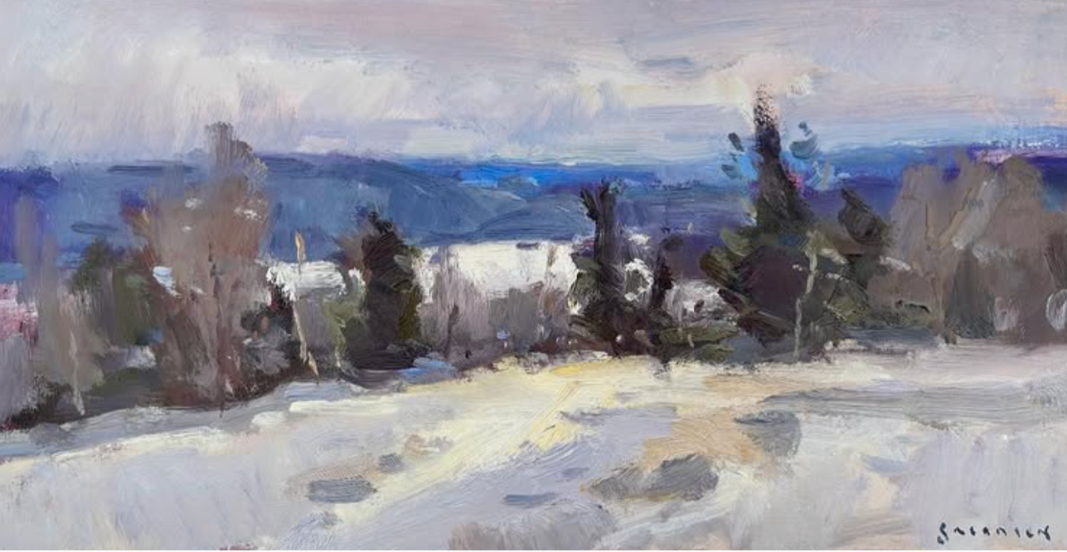
“Winter Overlook” 8x16, Eric Jacobsen Oil
Control the Value of the Sky
A common mistake is making the sky too dark—especially near clouds. While a sky can appear dark relative to bright cloud highlights, it should never approach the darkest values found in the landscape below.
Keeping the sky lighter overall ensures that it remains visually elevated and airy. Even when depicting stormy conditions or rain clouds, the sky should still feel lighter than the darkest foreground elements. This value hierarchy helps maintain depth and realism.
Establish Clear Temperature Relationships
Temperature plays a major role in making skies and clouds feel alive. A classic and effective approach is cool sky versus warm clouds.
Typically:
The blue sky remains cool.
Both the light and shadow sides of clouds lean warmer by comparison.
Even cloud shadows are often warmer than the sky, frequently shifting toward purples due to the combination of blue sky light and reflected warmth from the earth below. This warm–cool separation creates clarity, atmosphere, and a pleasing sense of sunlight.

“Clouds Over Penobscot Bay” 16x24, Eric Jacobsen Oil
Understand Reflected Light on Cloud Undersides
The underside of clouds often reflects light bouncing up from below. On sunny days, this reflected light can introduce warm yellows, ochres, or purples into the shadow areas of clouds.
What’s beneath the clouds matters:
Over land, earthy tones can reflect upward.
Over water, cooler reflections may influence cloud color.
Being aware of this reflected light helps explain why cloud shadows are often colorful rather than flat gray, and it adds richness and realism to your skies.
Follow a “Mostly One Thing, Some of Another” Recipe
When composing a sky, it’s helpful to avoid splitting it evenly between elements. Instead, aim for mostly one thing with some of another For example:
Mostly blue sky with some clouds
Mostly clouds with small breaks of light
Avoiding a 50/50 division keeps the composition dynamic and intentional. A small area of light within a darker sky can become especially powerful, standing out because of the contrast around it.
This principle applies even on overcast days—there may be no blue sky at all, but there should still be variation, whether through subtle lights, value shifts, or softened edges.
Use Lost Edges for Atmosphere
In distant clouds, rain, or heavy atmosphere, edges often disappear. Allowing clouds to lose their edges—especially where rain falls or forms dissolve—creates depth and mood. Soft, disappearing edges help convey moisture, distance, and movement in the sky.
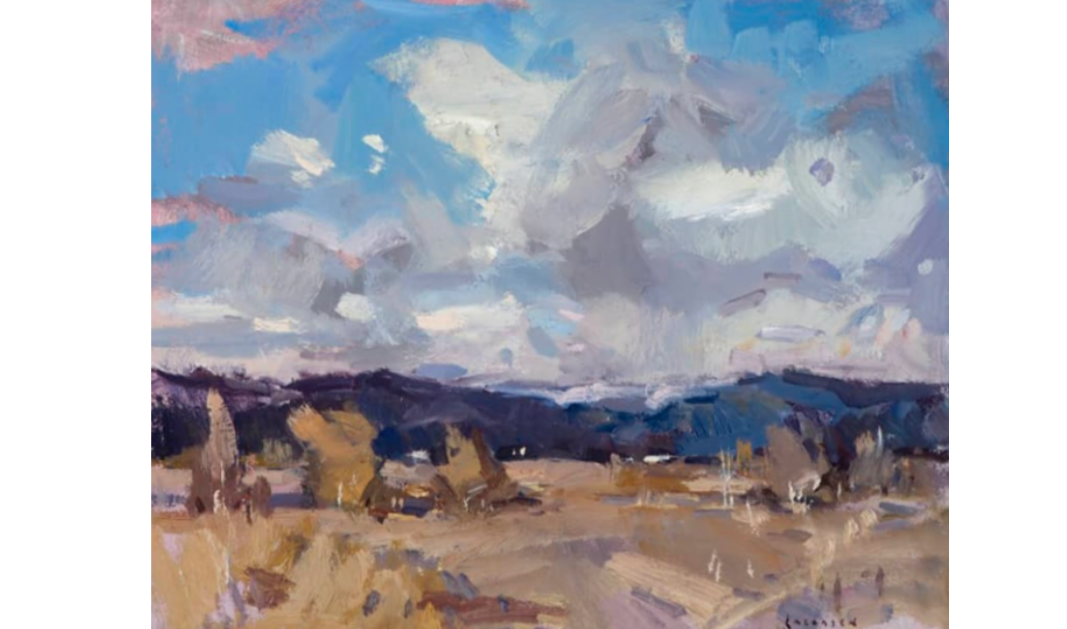
“Chance Of Showers” 16x20, Eric Jacobesen Oil
Final Thoughts
When painting clouds, always return to the fundamentals:
Make them float
Keep edges soft
Control values carefully
Establish warm–cool temperature relationships
Use intentional composition with “mostly and some”
By applying these principles consistently, your clouds will feel lighter, more believable, and more connected to the atmosphere around them. Happy painting!
Learn more from Eric Jacobsen below: