
How to Use Lead-Ins in Painting Composition
From Eric Jacobsen
What is a lead-in in a painting?
A lead-in is a visual pathway that invites the viewer into a painting and carries their eye to the main subject. It's often called a lead-in line, but Eric points out it doesn't have to be an actual line. It can be a path, a road, a creek, a row of shapes or even an angle in the clouds.
A good lead-in stops the eye somewhere that sits well in the overall composition, such as about a third of the way into the picture. It's one of the most useful tools in composition, and in Eric's view, it's rarely found exactly where you want it. Most of the time, you design it.
Why do you need to design a lead-in?
Real scenes are full of things in the foreground, middle ground, distance and sky, and nature doesn't arrange them for you. Lead-ins usually belong to the lower part of the painting, the foreground, but they can come down from the sky too.
The key, Eric says, is remembering to think about it from the start. Don't sit down and paint everything exactly where it is. Switch on your "editing brain" and decide to move things, place them where they look good, or leave them out entirely.
How do you create a lead-in when the foreground has none?
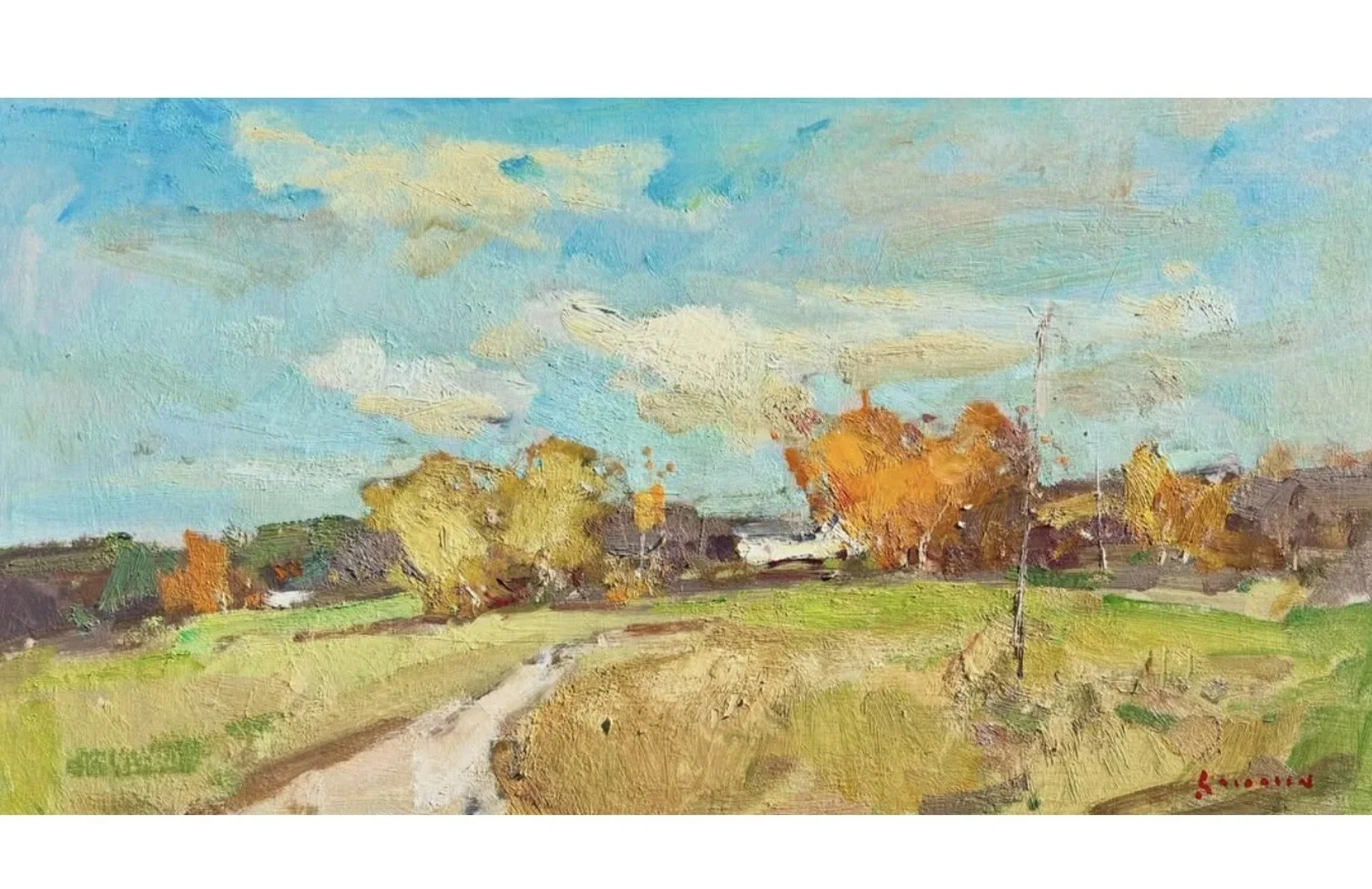
When a foreground is a big, unbroken mass, like an overgrown field, it acts like a wall. The viewer has no way in. Eric's fix is to imagine walking through it and taking the path of least resistance, then paint that path where you want it.
Knock down an area of lighter grass so it feels like a path meandering in.
Let it wind around or behind a foreground bush rather than running straight.
Add a few small dark patches of growth along the way. They act like breadcrumbs.
Keep the path on the light, so the eye stays on it.
Those dark spots create an implied line. There's no outline around the path, but the eye naturally follows the dots and the light shape back into the painting.
Can you move a path that's in the wrong place?
Yes. If a real path, road or trail exists but leads you in and then right back out, move it. Eric's advice is to use something that actually belongs in the area, just not where it really sits.
Bend the path so it leads back into the scene, and consider picking it up again farther back so the eye keeps traveling. Knowing a place well helps here, because you know what's believable to borrow and relocate.
When should you leave a lead-in out?
If a road or path pulls the eye away from your subject, paint it out. Eric shows this with a snow scene where a road curved off in the wrong direction. Covering it with shadowed blue snow and warm sunlit snow let the eye stay where it belonged.
Once it's gone, you're free to design something better, such as a faint trail of footprints in the snow that leads up to a doorway. It's believable, and it carries the viewer from the front of the painting to the subject.
How do you open up a foreground that blocks the view?
Tall weeds, brush or grass in front of a subject can form a wall. Eric's options:
Pretend the growth is shorter so more of what's behind it shows, like water reflecting the sky.
Give the mass an edge that the eye can follow inward.
Paint a literal walking path, roadway or trail through it.
It's about taking what nature gives you and adjusting it a little. A vertical element up front, like a telephone pole, can also counterbalance a building, though that's a separate design choice.
Can you find a natural lead-in?
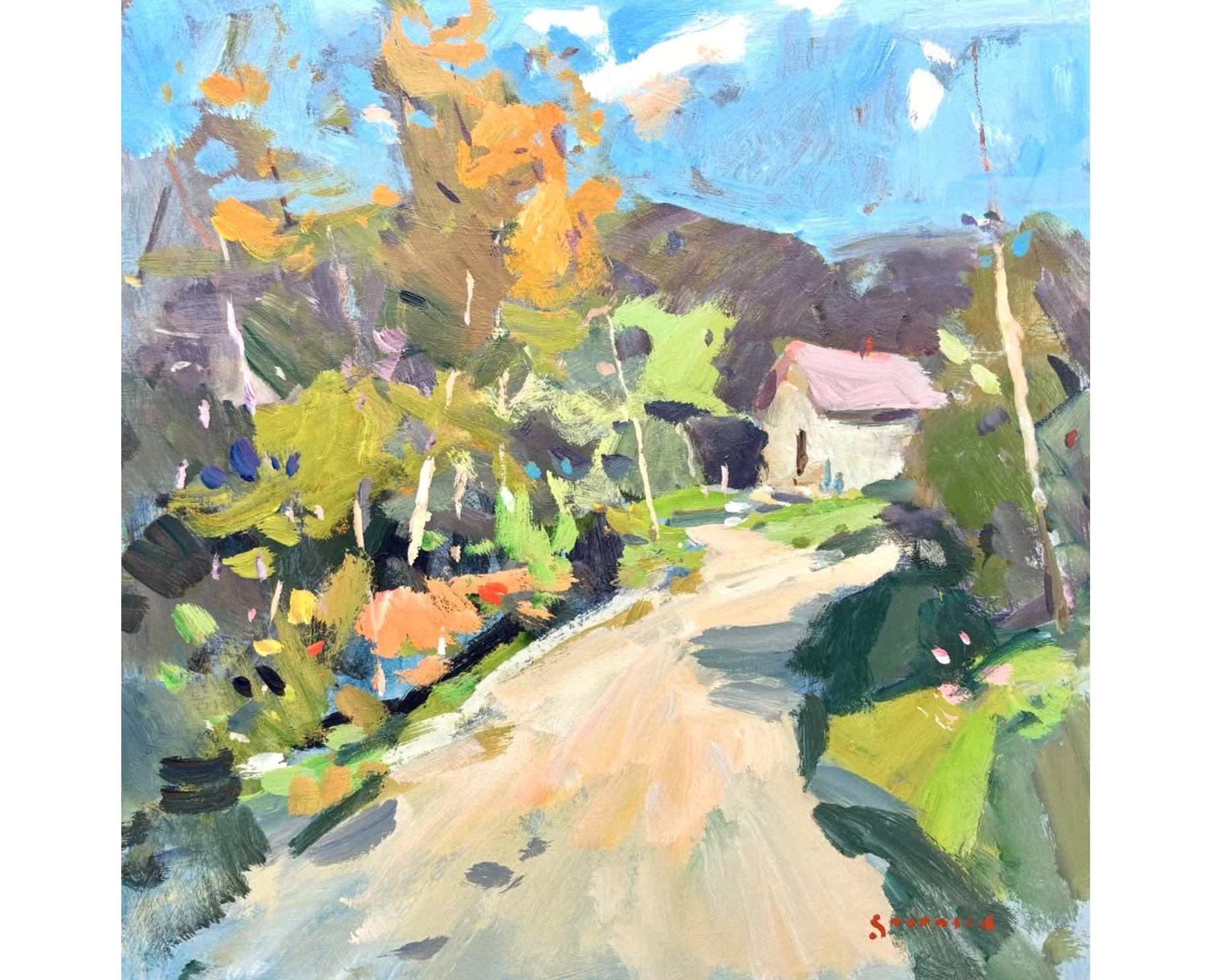
Sometimes, yes, especially in open country with winding dirt roads. Before you set up, move around. Walk another 15 feet to the left and the road may land exactly where you want it.
When nature hands you a good lead-in, you may not need to change it at all. Just don't count on it. More often than not, you'll need to adjust.
Should a lead-in be straight or meandering?
Both can work. A straight road angling into the scene is direct and gets the viewer in fast. A meandering creek or road is slower and more relaxed, and it tends to tuck the viewer right where the painter wants them.
Even when a creek or road is really there, skilled painters adjust its banks, edges and width to make the lead-in stronger. Your job is to make it better, not to copy it.
Does a lead-in have to be big?
No. A small piece of road at the bottom of a painting can be remarkably strong if it's angled into the scene. It shoots the eye straight in. Eric notes that taking even a tiny lead-in away makes that part of the painting noticeably weaker.
A small figure along the path also helps. It gives a sense of scale and distance, and the eye tends to follow from the figure on into the painting.
How can clouds act as a lead-in?
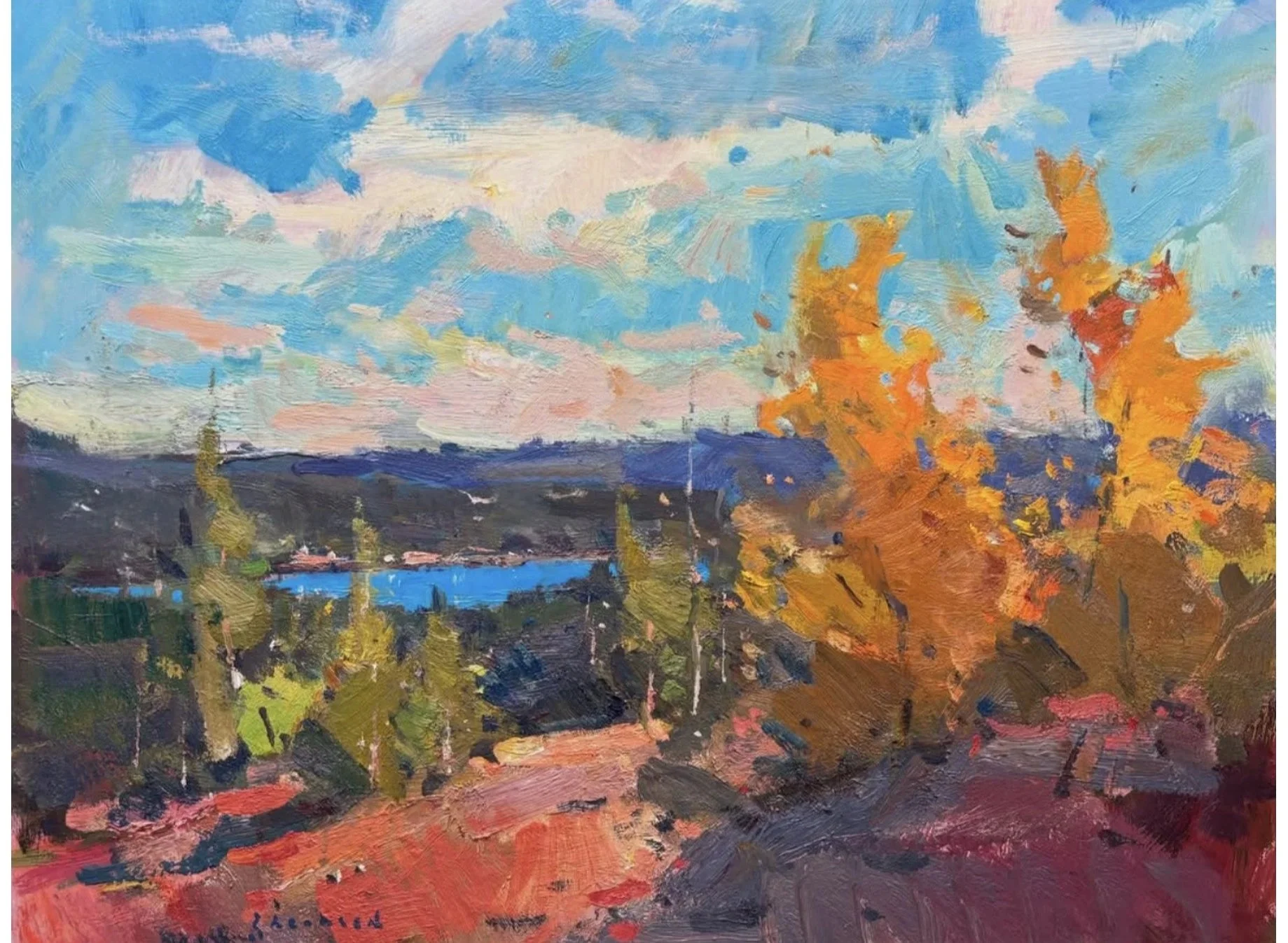
Clouds can lead the eye from the top of the painting, just as a path does from the bottom. An angled cloud edge pointing toward your subject is far more useful than clouds that run straight across or simply follow a ridge.
Eric especially likes clouds angled opposite to the land. The two angles work together to guide the eye down and into the space. Real clouds rarely line up this neatly, so place them on purpose.
How do you use lead-ins with water or structures?
Treat a big stretch of water like the open field: a blank space waiting for a pathway. Docks, piers, a shoreline or a dark edge can lead the viewer across it to the subject.
Ask yourself where you want that dark edge to lead, then put it there. The structures may be real, but you choose their angle and position.
How do lead-ins work in a still life?
In a still life, you can physically arrange the lead-ins. Turn a fish, angle a leek, or lay down a piece of paper so its edges point to your focal point.
Not every angle has to lead there, but the main ones should. Outdoors you can't move a road, so you paint it where you want it. Indoors, you set it up that way from the start.